

Cats are equal parts genius, chaos, and stealth. One second, they’re asleep in a sunbeam, the next, they’ve slipped out a door you didn’t even realize was open. It happens, and while it’s scary, most lost cats are found.
The key is to act quickly, stay calm, and know where (and how) to look. Here’s what actually helps if your cat goes missing and how to reduce the chances it happens again.
Stay Calm and Focused

It’s easier said than done, but panic won’t help you find your cat. Take a breath and start thinking methodically. The good news: many lost cats are recovered, especially when owners act quickly and search close to home.
Start Close to Home

Most missing cats don’t go far. Studies have found that indoor cats are often located within a few houses of where they escaped. Check under porches, decks, bushes, and cars. Cats tend to hide in tight, quiet spaces when they’re scared.
Search at the Right Times

Cats are more active at dawn and dusk, when it’s quieter and cooler. Go out during these times with a flashlight (yes, even at dawn/dusk—the reflection can help spot their eyes). Call softly and listen carefully rather than shouting.
Ask for Help (and Be Specific)

Recruit neighbors, friends, and family. Ask them to check garages, sheds, and crawl spaces—cats sometimes get accidentally trapped. Give people a clear description and your contact info so they know exactly what to look for.
Don’t Expect Them to Come When Called
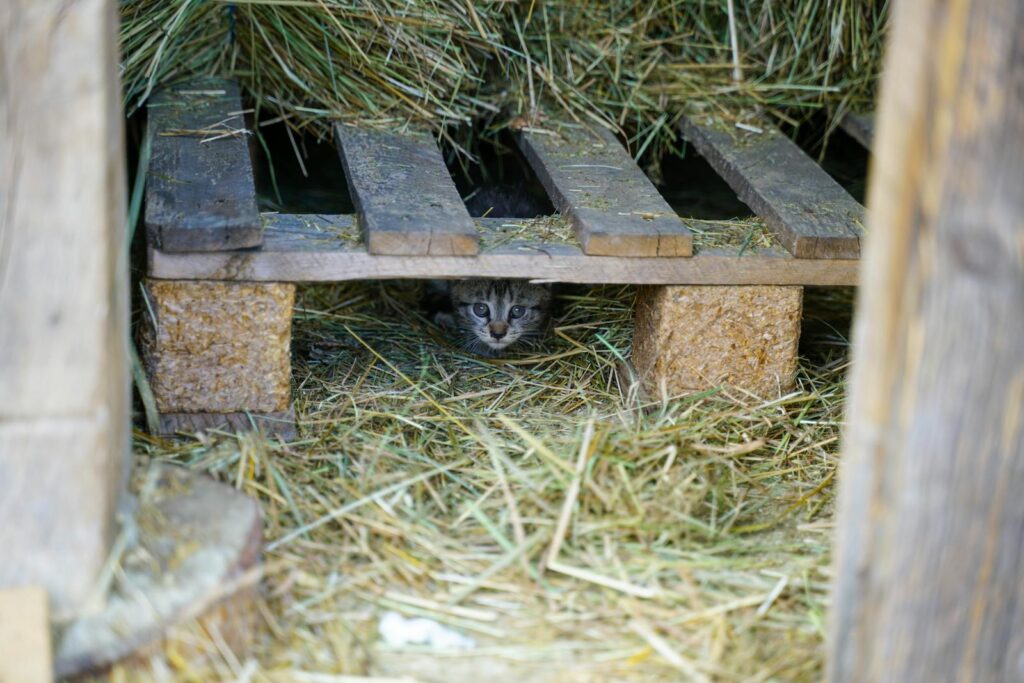
A scared cat often won’t respond—even to its owner. This is normal. Many cats go into “survival mode,” staying silent and hidden for days before venturing out. Keep searching even if you’re not getting a response.
Use Familiar Scents Strategically

Place items that smell like home outside, like your cat’s bedding or your worn clothing. Food can help, but it may also attract other animals. Contrary to popular advice, litter boxes outside don’t always help and can sometimes draw territorial wildlife, so use that tactic cautiously.
Get the Word Out Quickly

Post in local Facebook groups, Nextdoor, and community boards. Create a clear, simple post with a photo, location, and contact info. Flyers still work too, especially at nearby intersections, vet offices, and mail areas.
Contact Shelters and Vets

Reach out to local animal shelters, rescue groups, and veterinary clinics. File a lost pet report and check in regularly—don’t assume one call is enough. If your cat is microchipped, report them as missing with the registry.
Consider a Humane Trap

If you suspect your cat is nearby but hiding, a humane trap can be very effective. Many shelters or rescue groups will lend them out. Use food as bait and check the trap frequently to avoid stressing any animal that gets caught.
Use Technology if You Can

Motion-activated cameras can help confirm if your cat is returning to a specific area. GPS trackers (for future use) can also be helpful if your cat is an escape artist. Even a simple door camera can provide clues.
Prevent Future Escapes

Check screens, doors, and common escape routes around your home. Be extra cautious during moves, deliveries, and when guests are coming and going. Some cats benefit from enrichment (to reduce door-dashing) or even leash training for safe outdoor time.
Microchip and ID Are Non-Negotiable

A microchip significantly increases the chances of being reunited with your cat, but only if your contact info is up to date. A breakaway collar with an ID tag adds another layer of protection for quick returns.
Losing a cat is stressful, but in many cases, they’re closer than you think. Stay consistent, keep searching, and don’t give up too quickly. Cats are excellent at hiding… but they’re also surprisingly good at finding their way back.
Read More:
- 10 Common Foods You Should Never Give Your Dog
- Bringing Your Outdoor Cat Inside? Avoid These Common Mistakes
- These Common Household Items Are Toxic to Pets